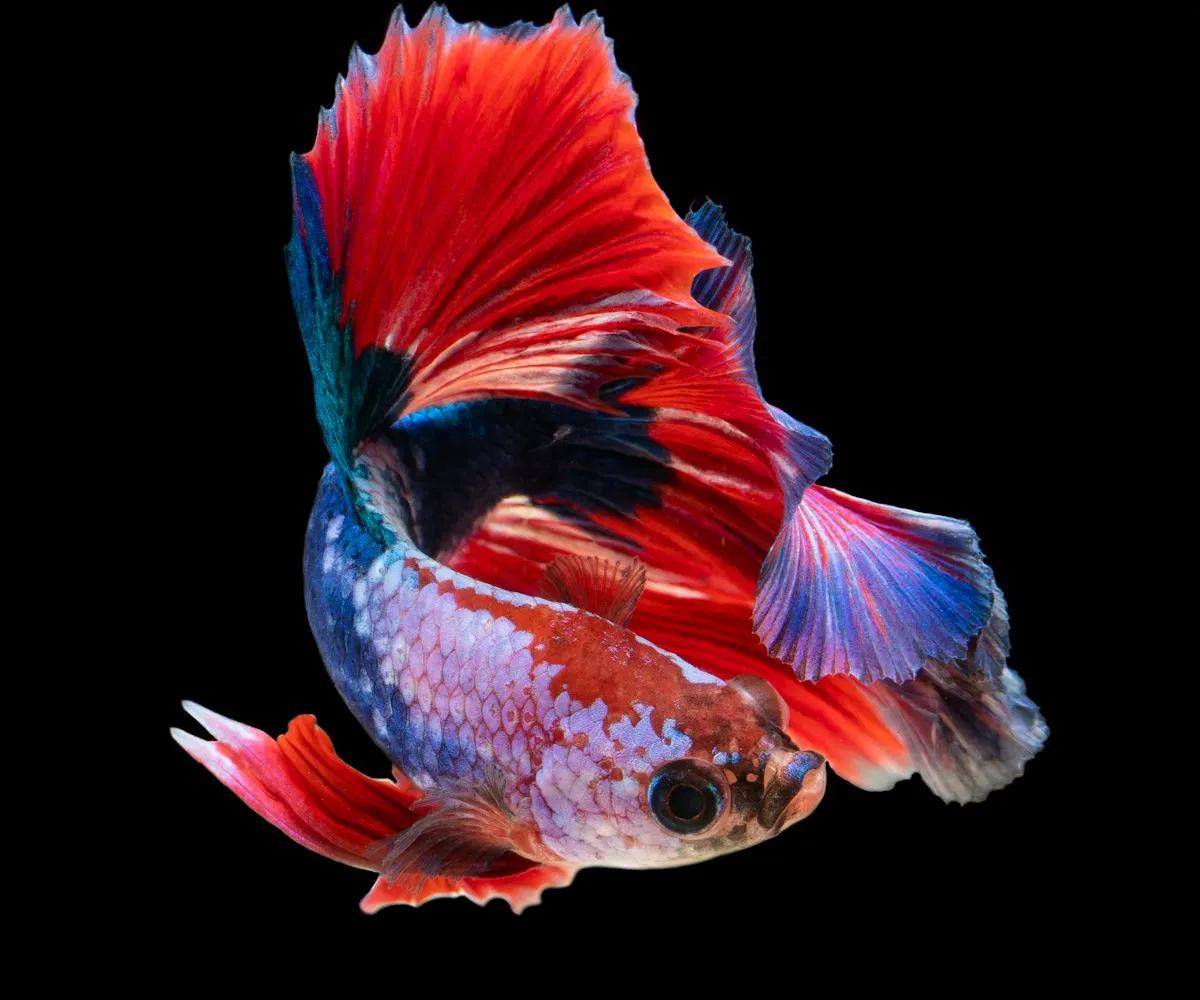
Betta Fish Care: What They Actually Need Beyond a Bowl
January 2, 2026 · 5 min read · Photo: Unsplash
Betta fish get sold in tiny cups at pet stores, which leaves a lot of people assuming a bowl or a small vase is basically what they’re built for. It isn’t. Betta splendens is a genuinely interesting fish with real needs, and meeting them isn’t complicated or expensive - it just isn’t what the store display implies.
Where the “bowl fish” idea comes from
Wild bettas live in shallow rice paddies, ditches, and slow-moving streams across Thailand and neighboring countries. They do have a labyrinth organ, a secondary breathing structure that lets them gulp air at the surface, and that’s exactly why they can survive in the low-oxygen puddles left behind when a paddy dries up in the hot season. That survival trick got turned into a marketing story: “bettas like small spaces.” Surviving a drought and living well are not the same thing. In a stable tank, bettas are active, curious fish that explore, investigate new decor, and seem to recognize the person who feeds them.
Tank size: bigger is genuinely easier
There’s no official regulation on minimum betta tank size, so treat any number here, including this one, as a rule of thumb rather than a hard line. Most experienced keepers land on 5 gallons (about 19 liters) as a practical minimum, with 10 gallons being noticeably easier to manage. The reason isn’t that a betta can’t physically turn around in less water. It’s that small volumes of water are chemically unstable: temperature swings faster, waste concentrates faster, and one missed water change matters far more in half a gallon than in five gallons. More water buys you a bigger margin for error, which is exactly what a beginner setup needs.
Heating: a betta’s home shouldn’t depend on your thermostat
Bettas are tropical fish that do best somewhere around 76-82°F (24-28°C), and most houses and apartments don’t sit reliably in that range year-round. A small, adjustable heater sized to the tank fixes this, paired with a separate thermometer so you’re not just trusting the heater’s dial. Unheated tanks in a normal room often drift into the high 60s or low 70s overnight, which won’t kill a betta outright but does slow its metabolism, weaken its immune response, and make it more likely to get sick over time. The smaller the tank, the faster and further the swings, which is another reason tiny bowls are a rough environment even before water quality enters the picture.
Filtration: gentle, not absent
Filtration gets skipped in a lot of betta setups because bettas have long, flowing fins and people worry about them getting battered around in a current. That’s a fair concern, but the fix is a gentle filter, not no filter. A small sponge filter, or a hang-on-back filter with the flow turned down (baffled with a bit of foam or a water bottle, a common DIY trick), gives a tank the biological filtration it needs without turning it into a wave pool. What filtration actually does is house the beneficial bacteria that break down fish waste before it builds up into ammonia. Without that, an unfiltered bowl needs very frequent, near-total water changes just to stay safe, and it’s easy to fall behind on that schedule.
Cycling: the step most bowl setups skip entirely
Before any fish goes in, a tank ideally goes through the nitrogen cycle: beneficial bacteria establish themselves and convert ammonia (toxic) into nitrite (also toxic) and then into nitrate (far less harmful in modest amounts). This takes time, and as a rule of thumb, many keepers budget somewhere around four to six weeks for a fishless cycle, though it varies with temperature and the bacteria source. If a betta goes into an uncycled tank, which is the default for a bowl, you’re relying entirely on manual water changes to remove ammonia until bacteria catch up on their own. It works, but it’s more maintenance, not less, and it’s harder on the fish while it’s happening.
A few other things that matter
Bettas are carnivores and do best on a betta-formulated pellet as a base, with occasional frozen or live food like bloodworms or brine shrimp for variety. Tap water needs a dechlorinator before it touches the tank, since chlorine and chloramine are harmful to fish gills. Plastic plants with sharp edges can tear delicate fins, so silk or live plants are the safer choice. And while male bettas are reliably aggressive toward other male bettas, and often toward other bettas in general, that’s a statement about bettas and bettas, not proof that every betta must live totally alone in every situation.
FAQ
How big of a tank does a betta actually need? As a rule of thumb, 5 gallons (about 19 liters) is a practical minimum, with 10 gallons or more being easier to keep stable long-term. There’s no official standard, but smaller volumes swing in temperature and water quality much faster, which makes them harder to manage, not easier.
Do bettas need a heater? Yes, in most homes. Bettas do best around 76-82°F (24-28°C), and unheated room-temperature water often falls below that range, which stresses the fish over time even if it doesn’t kill it right away.
Can a betta live without a filter? It’s possible, but it’s harder, not easier. Filtration hosts the bacteria that break down waste; without it, you need frequent, thorough manual water changes to keep ammonia from building up.
Can two bettas live together? Two male bettas will fight, often seriously, and should never be housed together. Female bettas are sometimes kept in groups, called sororities, in large, heavily planted tanks, but that setup takes real experience and close monitoring, and it isn’t a good starting project.
- betta fish
- freshwater aquarium
- fish care guide
- tank cycling
- aquarium setup