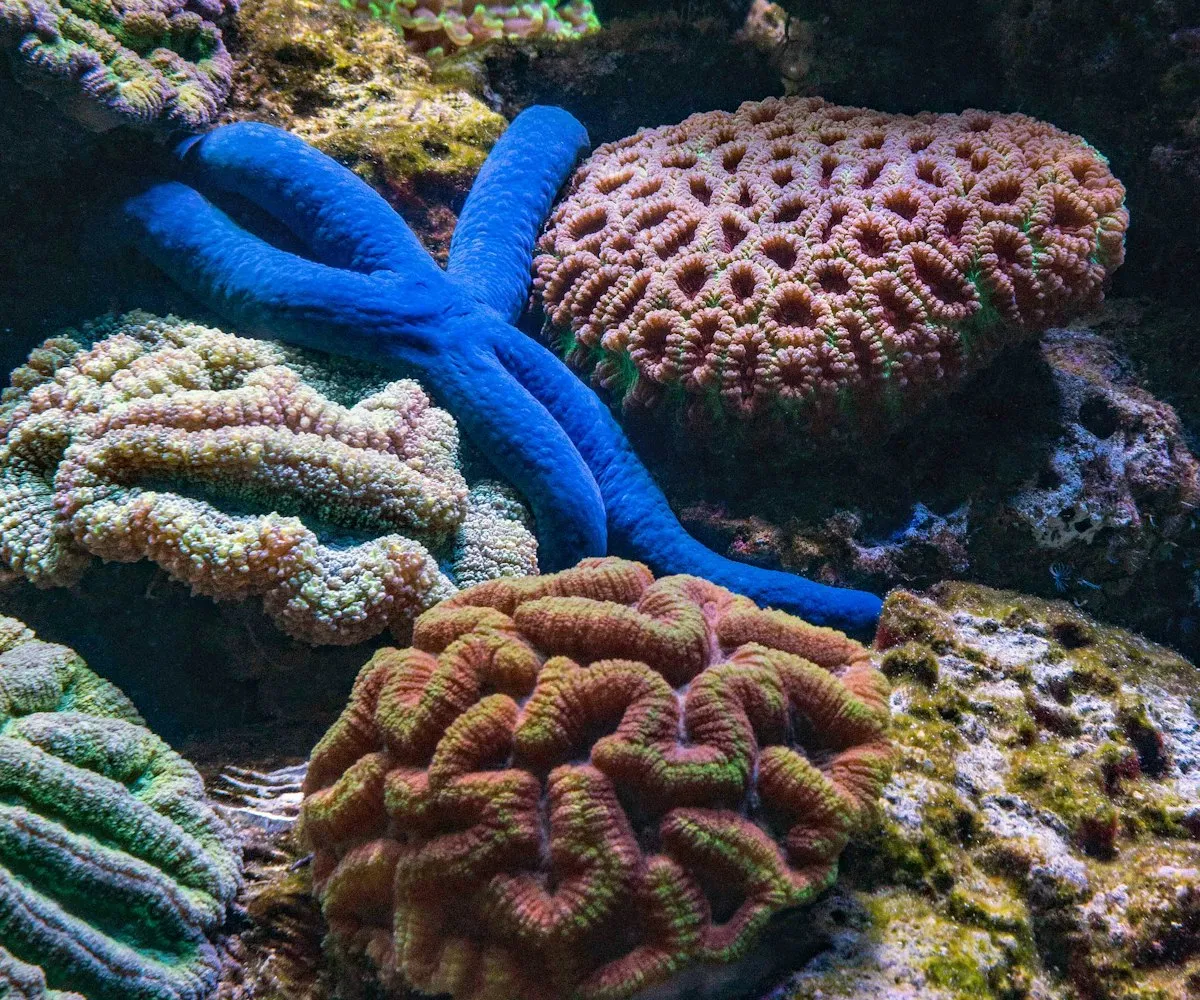
Reef Tank Basics: Your First Corals
January 6, 2026 · 6 min read · Photo: David Clode / Unsplash
If you’ve kept freshwater fish for a while and you’re eyeing that glowing reef tank at your local fish store, corals feel like the obvious next step. They are, but they’re a different kind of animal husbandry than fish — you’re not just keeping something alive, you’re farming a photosynthetic organism that also happens to eat. The good news is that a solid group of soft corals will forgive a lot of beginner mistakes while you learn. This guide covers which ones to start with, what lighting and flow actually need to look like, and the mistakes that trip up almost everyone on their first coral order.
Wait Until Your Tank Is Actually Ready
Corals don’t care that your tank finished cycling last Tuesday. A completed nitrogen cycle — ammonia and nitrite reading zero, nitrate present but controlled — just means your tank can support a bioload without poisoning it. It says nothing about stability, and stability is what corals actually need. Most experienced reefers let a tank run for at least a few weeks past cycling, and often a couple of months, before adding the first coral. During that window you’re dialing in salinity (aim for something in the 1.025–1.026 specific gravity range and hold it there), calcium, alkalinity, and magnesium, and watching how your tank behaves once fish are in it and the diatom and cyanobacteria blooms that hit almost every new tank have run their course.
There’s no shortcut here, and that’s fine — this is the boring part every reefer goes through, not a sign you’re doing something wrong.
The Best Soft Corals for a First Reef
Soft corals and “LPS-adjacent” beginner favorites earn their reputation because they tolerate a wider swing in light and flow than small-polyp stony (SPS) corals, which are notoriously picky.
A few reliable starting points:
- Zoanthids and palythoas — colorful, fast-spreading, and easy to frag once established. One real caution: some palythoas produce palytoxin, one of the most potent natural toxins known. It’s not going to hurt you from across the room, but wear gloves when handling them, never scrub or boil them in hot water indoors (the fumes are the actual danger), and wash up afterward.
- Mushroom corals (Discosoma, Ricordea) — about as forgiving as coral gets, and they’ll multiply on their own once happy.
- Toadstool and leather corals (Sarcophyton, Sinularia) — big, showy, and genuinely hard to kill. They do periodically shed a waxy film as part of a normal molt cycle; it looks alarming the first time and isn’t.
- Green star polyps and Kenya tree — grow fast, spread over rock and glass, and are a good “is this even working” confidence builder. Grow them somewhere you don’t mind them taking over, because they will.
Avoid clownfish-and-anemone starter kits for now. Anemones need more mature, stable conditions and stronger lighting than most new tanks can offer, and an unhappy anemone can crash a tank by dissolving.
Lighting: You Don’t Need to Overbuy
Soft corals get a meaningful chunk of their energy from photosynthetic algae living in their tissue (zooxanthellae), so they do need real reef lighting, not a generic aquarium hood. The good news is you don’t need to chase the intense output that SPS corals demand. As a rough rule of thumb — not a hard target — most soft corals do fine in the lower-to-moderate PAR range, and a mid-range LED fixture run at 40–60% intensity on a 6–8 hour photoperiod is a reasonable starting point for a shallow tank.
The bigger issue for beginners isn’t fixture choice, it’s acclimation. Corals shipped from a dimmer holding tank or a different fixture can bleach or recede if you drop them straight under full-intensity light. Place new corals low in the tank or in partial shade for the first week or two, and if you’re increasing your own lighting intensity, ramp it up gradually over a couple of weeks rather than jumping straight to your target settings.
Flow: Corals Want a Breeze, Not a Blast
Flow does three jobs: it delivers food and gas exchange to the coral’s surface, it sweeps away the mucus and debris the coral is constantly shedding, and it keeps detritus from settling and rotting on and around it. What corals don’t want is one powerhead blasting them directly and constantly from a single angle — that’s a common way to see tissue recession on leathers and torn, tattered polyps on softer species.
Aim for broken-up, somewhat randomized flow rather than a straight jet — alternating or wave-mode powerheads help a lot here. A commonly cited starting point is roughly 10–20 times your tank’s volume in total turnover per hour, split across a couple of return points, though the right number really depends on your tank’s shape and stocking. Watch the coral, not the pump spec sheet: polyps that stay closed, tissue that looks shredded, or visible dead spots with detritus piling up are all flow problems worth adjusting for.
Mistakes We See Beginners Make Over and Over
- Skipping the dip. New corals should get a coral dip (an iodine-based or similar product from your local fish store) before they go in your display, full stop. It’s the single best defense against hitchhiking pests like Aiptasia anemones, flatworms, and predatory nudibranchs that specifically eat zoanthids.
- Placing corals too close together. Corals sting and chemically fight neighbors for space. Leave real gaps, because today’s frag is next year’s colony.
- Chasing numbers instead of consistency. A calcium reading that’s slightly “off” but stable is far less dangerous than a perfect reading you got by overdosing a supplement to fix it fast. Big swings hurt corals more than moderate, steady numbers.
- Using copper-based fish medication in a tank with corals. Copper is lethal to corals and most invertebrates at levels that barely register for fish. If you need to treat a fish for disease, do it in a separate quarantine tank.
- Buying too many corals at once. Every new addition is a new acclimation, a new light adjustment, and a new set of parameters to monitor. Stocking slowly gives you room to catch problems before they compound.
FAQ
What’s the easiest coral for an absolute beginner? Mushroom corals and green star polyps are usually the most forgiving — both tolerate a range of light and flow, recover well from mistakes, and multiply quickly enough that you’ll see progress even if conditions aren’t perfect.
How long after my tank finishes cycling can I add coral? The cycle finishing (zero ammonia and nitrite) is the minimum, not the target. Most reefers wait several extra weeks to a couple of months so salinity, alkalinity, and calcium have time to stabilize and the initial algae blooms settle down.
Do I need expensive lighting to keep soft corals? No. A mid-range reef LED fixture run at moderate intensity is enough for most soft corals — they’re far more tolerant of lower light than SPS corals. Acclimating new corals gradually to your lighting matters more than the fixture’s price tag.
Are soft corals safe to keep with fish? Generally yes, and most reef-safe fish leave them alone. The main risks are fish species known to nip corals (some butterflyfish and angelfish) and copper-based medications, which are toxic to corals even at doses that are safe for fish.
- reef tank
- beginner corals
- soft corals
- reef lighting
- saltwater aquarium
- coral flow
- aquarium mistakes